

Learn everything you need to know about ASD service dogs and the benefits they bring to children and their families.
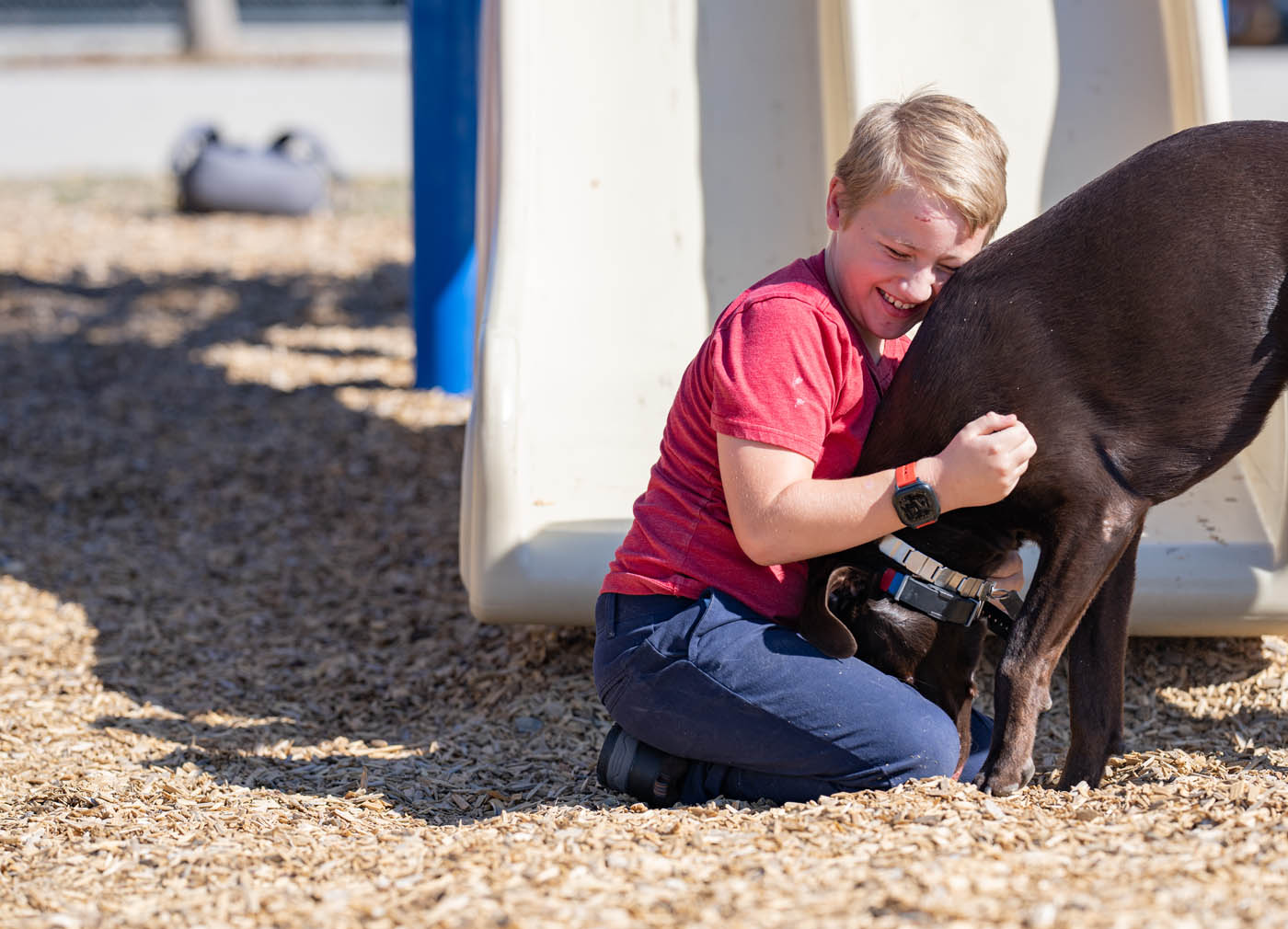
Service dogs can greatly improve the lives of children with Autism Spectrum Disorder (ASD) by providing safety, emotional support, and consistency. They are trained to recognize and interrupt concerning behaviors or emotional distress, alleviating stress for both ASD children and their parents.

Autism Spectrum Disorder (ASD) is a developmental condition that affects how individuals perceive and interact with others. The term spectrum reflects the wide range and severity of symptoms, which can vary greatly from one person to another.
Symptoms of ASD usually appear within the first year of a child’s life. Between 4 and 12 months of age, common signs may include limited eye contact, a lack of response to their name, minimal facial expressions, reduced babbling or vocalizations, and low interest in smiling or engaging in back-and-forth play. 1 Some children may appear to be developing typically during this stage, but begin to show signs of regression between 18 and 24 months of age. 2
As awareness and understanding of Autism Spectrum Disorder continue to grow, the availability and use of early ASD intervention during childhood are becoming more common. This often includes therapies such as applied behavior analysis (ABA), speech and language therapy, occupational therapy, and support from specially trained service dogs.
In this blog, we’ll explore everything you need to know about autism service dogs for children, backed by scientific research on how they provide safety, emotional support, social development, and life-changing benefits for the entire family.
1 https://kotm.org/early-signs-of-autism-in-1-year-olds-what-parents-should-watch-for/ 2 https://www.mayoclinic.org/diseases-conditions/autism-spectrum-disorder/symptoms-causes/syc-20352928
Service dogs are trained to perform specific tasks based on the needs of the individual they support. For children with autism, their duties may include:
Because of the complexity and variety of needs across the autism spectrum, not just any dog can fulfill this role. While ASD service dogs can be any breed or size, they must be carefully selected and professionally trained to provide consistent and appropriate support to their primary handler.
Autism service dogs can make a life-changing difference for children on the spectrum and their families. Below are some of the most well-researched and documented benefits:
Autism service dogs can significantly reduce the risk of wandering or bolting, a behavior often linked to a child’s limited awareness of danger. One of the most effective methods used is tethering, a secure harness system that connects the child to the dog.
A study published by Walden University compared children with autism paired with service dogs (intervention group) to a control group without service dog support. Parents in the intervention group reported that their child’s tendency to bolt or wander was resolved with tethering, leading to a notable reduction in parental stress. 3
Autism service dogs have helped some families reduce the frequency and intensity of challenging behaviors associated with ASD.
In a thesis published by the Canadian National Autism Foundation, researchers interviewed ten families to understand the impact of service dogs on children with autism. Parents reported a variety of positive behavioral changes, including reduced social anxiety, fewer meltdowns, and defused anger. 4
4 https://www.cnaf.net/documents/NationalServiceDogsStudy.pdf
For many children with autism, social interaction and communication can be one of the most challenging areas of development. Service dogs can act as social bridges, encouraging connection, conversation, and increased confidence.
A study published in Frontiers in Psychology observed autistic children participating in a structured, 17-stage dog-interaction program. After the intervention, researchers noted improvements in verbal and non-verbal communication, joint attention, and social exchanges, along with a decrease in maladaptive behaviors. 5
While not focused specifically on service dogs, the study supports growing evidence that dog-assisted interventions can positively impact social development in children with autism.
5 https://www.frontiersin.org/journals/psychology/articles/10.3389/fpsyg.2024.1496915/full
Autistic children who find comfort from deep pressure, physical contact, or proximity can benefit greatly from a service dog trained to offer support through touch, leaning, or staying close.
Additionally, human-animal interactions have shown strong potential in lowering cortisol levels (the body’s primary stress hormone). In a peer-reviewed study published in PLOS ONE, researchers found that dog-assisted interventions significantly reduced acute and long-term stress in school children, including those with special educational needs. 6
6 https://journals.plos.org/plosone/article?id=10.1371/journal.pone.0269333
Due to a combination of biological, neurological, and environmental factors, many autistic children struggle with falling asleep, staying asleep, or feeling rested. Service dogs provide consistency and comfort, which is why they may be an ideal support during bedtime routines.
In a 2024 study, 75 families with autistic children were surveyed—39 of them with service dogs. Families with a service dog reported better sleep behaviors, including easier sleep initiation, longer sleep duration, and reduced sleep anxiety or co-sleeping. These improvements were observed with medium effect sizes, offering promising evidence of the impact service dogs can have on sleep. 7
7 https://www.frontiersin.org/journals/psychiatry/articles/10.3389/fpsyt.2024.1355970/full
Many individuals on the spectrum prefer to follow set patterns throughout their day. When routines are disrupted, it can lead to anxiety, emotional distress, or difficulty with daily tasks like getting ready or transitioning to school. ASD service dogs provide consistent support and can help children feel more secure during these moments.
In addition to supporting daily functioning, service dogs can help families feel more confident in community settings by reducing meltdowns and unsafe behaviors. In a recent study published by Frontiers in Psychiatry, caregivers reported that service dogs improved social experiences, reduced feelings of judgment or stigma, and strengthened emotional bonds at home. 8
8 https://www.frontiersin.org/journals/psychiatry/articles/10.3389/fpsyt.2023.1210095/full
While autism service dogs are trained to support the child, their impact can extend to the entire family.
What often develops is a positive “feedback loop,” where each improvement in the child helps the parent, and in turn, the parent is better able to support the child.
Here’s an example of what that may look like:
Child’s improved behavior → Lower parental stress → Better interactions → Stronger bond → Further child improvement

While service dogs are a life-changing investment for children with ASD, families must be aware of the potential challenges and responsibilities that come with an autism support dog.
Here are a few considerations you should know:
These considerations don’t diminish the value of service dogs, but they do highlight the importance of preparation, support from qualified trainers, and setting realistic expectations.
With the right match and support system in place, many families still find that the long-term benefits far outweigh the potential challenges.
If your family wants to look further into getting an ASD service dog, there are a few steps you should follow and consider before beginning the process with an organization or trainer.
Here’s what to do:
The child should have a formal autism diagnosis, be within the commonly accepted age range (typically 3–9 years old), and exhibit behaviors that a service dog can help with, such as communication difficulties, social challenges, or a tendency to wander or bolt.
Consider whether your home has the space, stability, and safety for a service dog. Families with other pets, limited structure, or safety concerns may need to plan accordingly.
A strong, safe connection between the child and dog is crucial. The child doesn’t need to love dogs right away, but they should show some level of interest, tolerance, or potential for bonding.
The family must be committed to ongoing training, reinforcement, and daily care. Parents and caregivers will play a main role in reinforcing commands and managing the dog’s needs.
Reputable service dog programs will match a dog based on temperament, training, and energy level, ensuring the best fit for both the child and the household.
Once a dog is matched, training begins with supervised “team training” sessions at the facility. After that, in-home training may be required or optional, depending on the organization. For best results, many families partner with professional trainers like Dog Training Elite to support the transition and ensure long-term success.
Surveys, clinical studies, and real-world success stories from around the world show that service dogs offer effective support for children with autism. Through their companionship, intuition, and specialized training, service dogs provide a steady presence and help guide those who experience the world differently.
If you're exploring interventions for a child with Autism Spectrum Disorder, consider autism service dog training. Consult with a training provider like Dog Training Elite today to explore your options and take the next steps.
You and your canine companion really can have it all. See how easy it can be to become a member of the elite pup society by requesting a free consultation today!


