

A therapy dog walking in a park with their owner - contact Dog Training Elite to talk to a professional therapy dog trainer!

Therapy Dog Training

Dog Training Elite

Request Free Assessment

Request Free Assessment

Our Therapy Dog Training Could Help:
Those managing chronic pain
People looking to increase social interaction
Anyone seeking enhanced motivation and purpose
Individuals in need of emotional comfort
Those experiencing stress, anxiety, or depression
People wanting to boost overall optimism
Anyone feeling lonely or isolated

Therapy Dog Trainer

What is a Therapy Dog?

A therapy dog is trained to provide emotional support and comfort to people in need, often visiting hospitals, nursing homes, and schools. These dogs must be friendly with strangers, able to handle high levels of distraction, and understand personal boundaries like not jumping, licking, or mouthing. With proper training, therapy dogs can bring joy and emotional relief to those they interact with, offering companionship in stressful environments.

At Dog Training Elite, we offer programs to help your dog become a certified therapy dog. As a leading therapy dog trainer, we focus on developing the right temperament and skills so your dog can confidently provide comfort and support in various settings. With our professional guidance, your dog can become a valuable source of emotional care and connection for individuals in need.

See Training Packages
A therapy dog in training with Dog Training Elite's expert handlers.

How Does a Dog Become a Therapy Dog?


Read More
Read Less

While the companionship your dog brings you may inspire you to share that with others, not every dog is suited to be a therapy animal. Beyond a friendly, loving personality, several important qualifications must be met for a dog to be considered for therapy work:

  • Age: Puppies are typically too energetic and lack the focus to be therapy dogs.
  • Obedience: A therapy dog must follow commands reliably. Dogs that have completed obedience training with Dog Training Elite have the solid foundation needed to begin therapy dog training.
  • Social Skills: Therapy dogs need to naturally enjoy meeting new people and must handle being petted and approached by strangers without anxiety. Their ability to remain calm and friendly, even in unfamiliar situations, ensures they can provide emotional support to those they interact with.

Get Your Free Assessment

You and your canine companion really can have it all. See how easy it can be to become a member of the elite pup society by requesting a free consultation today!

Hear From Our Customers

Learn Why Dog owners choose Dog Training Elite

  • Lee Foster
    Aug. 31, 2026
    When I signed up for classes I wasn’t sure if anything would work or help me and my dog. She was impossible to walk on a leash comfortably or to have a leisurely walk. Very reactive when a person or dog would walk by. She was way too crazy. Hard to just walk by anyone without wanting to jump up and pull toward them. Just overly excited. But it really has made a HUGE difference. It’s actually amazing to me the difference, even in the first 2 days. From being dragged into the building by my dog the first day to an easy walk to the building the next. We are both much happier now. It’s been a great experience.
  • Ashley Murphy
    Aug. 30, 2026
    We had a great experience with Nathan! He did an awesome job training our puppy and us! Our puppy now has manners when guests visit and stays with us on walks. We appreciate all that you did!
  • Matthew S
    Aug. 30, 2026
    I highly recommend Dog Training Elite (DTE). Truman is my 25 pound Mini Bull Terrier that was extremely reactive to other dogs on the other side of fences or on a leash with their owners. Walks would get stressful and needed a lot of active avoidance of situations where another dog could get within 10-12 feet of Truman. Not a good life for a dog or fun for me. After two weeks of focused doggy "boot-camp" and homework, Truman's behavior was an order of magnitude better. His first hour long outdoor group class after "graduating" involved about twenty other dogs and their owners. Truman kept his cool (ie., making good doggy decisions), with Truman and numerous other dogs walking or weaving by. That would have been literally impossible with even one dog three weeks earlier. He is much, much better with the basics like recall, sit, down, heel, door manners, etc.. Truman and I still have a lot of work to do to get all his much better behaviors solid, but I think DTE has given us the tools we need to be successful at getting Truman to his best life as a well behaved little dog in the outside world.
  • Tamela Giroux
    Aug. 30, 2026
    First meet was great. My pup loved meeting the “dog whisperer”. I look forward to learning from him!
  • Alexandria Sandoval
    Aug. 29, 2026
    John did an amazing job with our pup. Our pup started showing reactive tendencies and would ignore any recalls. He would make people feel uncomfortable by his bark and appearance. After even a few sessions of just obedience trainings , our pup was starting to calm down. John really took his time and explained everything for us and was available whenever we had questions. Our pup is doing way better and is reactivity is way down. We will continue to go over the basics with him. Thank you to John and Elite Dog training for your time and guidance.
  • Sizzle Sizzle
    Aug. 29, 2026
    Aiden was able to come out and explain the dog training program. He entered every question that I have and brought his friend along to demonstrate some of the commands and things that we would be learning during training.. it was able to provide me with a reasonable quote and expectations for next steps. I'm looking forward to working with him.
  • nadira santiago
    Aug. 29, 2026
    Maggie is amazing, she goes detailed on how to properly train our dog. Before training she take time to observe and understand how our pup is. Highly recommend 👌
  • Amanda Anderson
    Aug. 29, 2026
    Our trainer Kim is fantastic! We have done four of our 5 in-home classes and one group class. Group class was amazing. Would recommend Dog Training Elite Kansas City to anyone with a dog.
  • Donita Covington
    Aug. 29, 2026
    good experience
  • beverly weiner
    Aug. 29, 2026
    JB brings a wealth of expertise and experience to his training. As an educator of both Zsa Zsa and myself, he adapts to our needs, explains tasks clearly, and corrects promptly. Working with JB is a pleasure and the results are gratifying.
  • Vicki Stephens
    Aug. 28, 2026
    This was our goal, to create a bonding with us ‼️
  • DEBBIE DIBBLE
    Oct. 22, 2025
    Chloe is great. You can tell that she enjoys her work, takes it seriously and is very good at it. I trust Chloe with my girl.
  • Dawn Slocum
    Aug. 28, 2026
    Chloe is the best with both of our pups. She helped tremendously when we were at our wits end.
  • Thomas Slocum
    Apr. 21, 2026
    The trainers are extremely professional and knowledgeable. It is a joy to see how far in just a few sessions our Lab has progressed.
  • S Moru
    Aug. 28, 2026
    Great people and training. I would give 10 stars if I could.
  • F. I. Walker
    Aug. 28, 2026
    I enjoyed Reina & Aidan, they were so knowledgeable and gave amazing analogies and personal experience references. I loved how they educated me on the “why” of my actions in relation to what I’m communicating to Sirhant.
  • Lisa Lane
    Jul. 31, 2026
    3rd session today and it was great!! Rheyt and Kaitlyn ate fabulous!
  • tm crowley
    Jun. 6, 2026
    patience, kind & knowledgeable. Thank you for helping us with our anxiety dog.
  • Arun Ghimire
    Aug. 28, 2026
    I worked with Brennan to train my German Shepherd puppy, and as a first-time dog owner, I knew I needed some guidance when he started entering adulthood and showing some obedience and behavioral challenges. My experience with Brennan and his training program has been nothing short of amazing! I’m now three weeks into the program, and the difference in my dog is incredible. After our very first session, I started seeing tremendous progress. Now, I can honestly say that I no longer have the complaints I had about his behavior when we first started. He is SO much better than he was at our first meeting! He still has more to learn, but seeing how far he has already come in just three weeks has been amazing. As a first-time dog owner, I really appreciate that Brennan didn’t just train my dog. He taught me how to better understand, communicate with, and handle him. He created a personalized training plan specifically for my puppy, clearly communicated expectations, and showed me how to properly use the training tools and commands. The program has been great so far, and I’m so excited to see how much more progress my dog will make as we continue. I’m extremely happy with the results and grateful for everything Brennan has taught both me and my dog. I would absolutely recommend him to anyone, especially other first-time dog owners looking for the right guidance and support!
  • elaytra wetsel
    Aug. 28, 2026
    John was fantastic working with our puppy and us. He helped us make our training fun and less stressful, our two older dogs are also enjoying the results of our puppy's training. We are grateful for all the help John and the other staff provided.
An obedient dog in a emotional support dog training program.

Benefits of Therapy Dogs

Read More
Read Less

Therapy dogs have a profound impact on individuals’ emotional and physical well-being. Research demonstrates that therapy dogs can improve a patient's mood, reduce stress, and even lower pain levels during hospital stays or medical treatments. Their calming presence provides comfort and relief in challenging moments.

Children, in particular, often respond well to therapy dogs. The companionship and playful interaction of a therapy dog can motivate children to engage more fully in treatments, helping them overcome fear or reluctance. With a therapy dog by their side, children tend to feel more optimistic and less anxious.

Beyond medical settings, therapy dogs also foster social interaction, especially in autism and mental health communities. These dogs offer non-judgmental companionship and serve as a bridge for individuals who may struggle with social connections. By reducing feelings of loneliness and anxiety, therapy dogs offer their owners comfort and companionship that enhances the overall quality of life.

A therapy dog handler with their dog trained by Dog Training Elite.

Therapy Dog Handlers

Read More
Read Less

If you’ve ever wanted to make a meaningful impact in your community, becoming a therapy dog handler offers a unique opportunity to do so alongside your dog. You can choose where to volunteer based on your interests, such as schools, hospitals, or senior living centers.

Once you’ve decided, therapy dog training is the next step. Dog Training Elite’s expert trainers will help your dog master essential behaviors like loose-leash walking, “leave it,” and not jumping on people. After completing training, you can apply for therapy dog certification, but it’s essential to keep up with ongoing training to ensure your dog remains well-behaved and ready to assist.

Additional Training Programs

Dog Training Elite - Dog Obedience Training. DTE

Obedience Training

Dog Training Elite - Puppy Training. Dog Training Elite

Puppy Training

Dog Training Elite - Service Dog Training. Dog Training Elite

Service Dog Training

Dog Training Elite - Anxiety & Aggression Dog Trainer. DTE

Anxiety & Aggression

Dog Training Elite - Top Protection Dog Training. Dog Training Elite

Personal Protection

Dog Training Elite - Group Class Dog Training. DTE

Group Training

A fully trained service dog from Dog Training Elite.

Emotional Support Dog Training

Why Choose DTE for Therapy Dog Training?

Read More
Read Less

At Dog Training Elite, our training programs prepare your dog for real-world situations where their presence can provide emotional support and comfort. Beyond just obedience, our training teaches your dog how to handle stressful or highly stimulating environments like hospitals, schools, or nursing homes.

We also place a strong emphasis on socialization and adaptability, making sure your dog can confidently engage with people of all ages and backgrounds. Therapy dog work requires attentiveness and empathy, and our training helps your dog develop these traits. With a foundation of trust, consistency, and patience, your dog will be fully equipped to offer comfort and companionship wherever it’s needed.
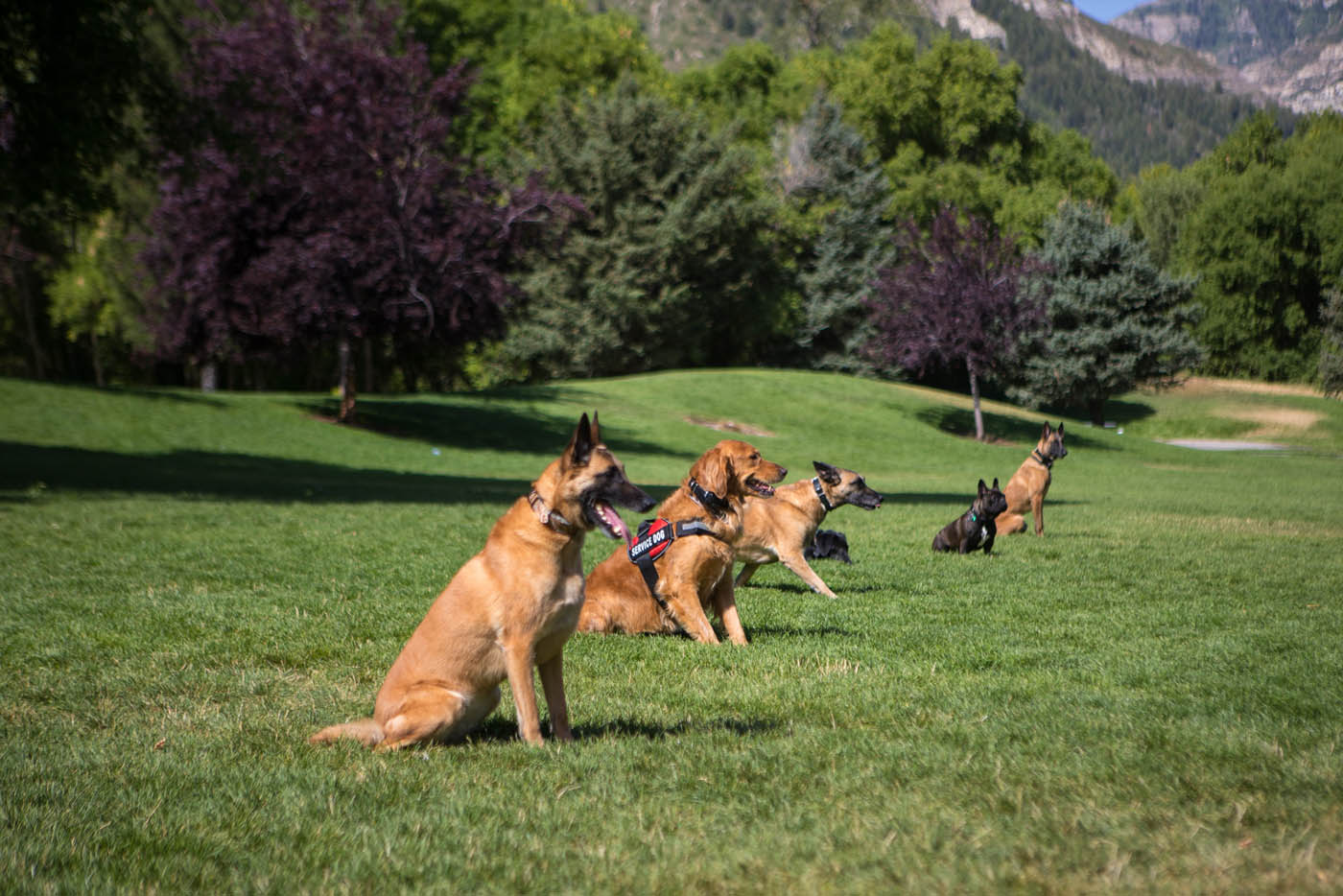
A group of dogs being trained by the expert team at Dog Training Elite.
Dog Training Elite light star icon.

Educate, Empower, Elevate, Elite

Victory Begins With Elite Education

ESA vs. Therapy vs. Service Animals

What's the Difference?

Animals that provide assistance and companionship can be classified into three main groups: service animals, emotional support animals (ESAs), and therapy animals. Each has different responsibilities, training requirements, and legal protections. Knowing the differences can help you choose the right type of support for a disability, emotional needs, or therapy purposes.

Here are the defining features of each type:

Service animals are trained to help individuals by performing tasks that meet their specific needs, such as:

  • Redirecting attention when an individual is beginning to feel overstimulated
  • Reminding owners to take medication
  • Waking someone who is having a nightmare

Service dogs are highly valued in the mental health and disability community and are protected under ADA laws, allowing them to accompany their owners anywhere. At DTE, we provide specialized training for service dogs that assist individuals with autism, diabetes, and PTSD.

The key difference between ESAs, therapy dogs, and service dogs is that service animals are protected by the Americans with Disabilities Act. This means they are allowed to go anywhere their owner goes. ESAs and therapy dogs do not have the same protections as service dogs, and public places can set their own rules about allowing them.

ESAs are prescribed by licensed mental health professionals to help individuals with mental health conditions such as anxiety or depression. These animals provide emotional support simply by being a comforting presence. Unlike service dogs, ESAs are not trained to perform specific tasks related to their owner's condition.

ESAs can be of any breed or age, and while they do not require the same level of training as service dogs, many owners choose to seek additional training. This can help strengthen the bond between the owner and the animal and improve the ESA's ability to provide consistent emotional support in different situations.

Therapy animals provide comfort and emotional support to individuals in need. They are not trained to assist a single person but are instead taught to be well-behaved and sociable around various groups of people. These animals help reduce stress, anxiety, and loneliness for those they visit.

Unlike service animals, therapy animals are not required to perform specific tasks. Their calming presence is what makes them valuable in therapeutic programs.